• You're one step from joining Cheese Making Forum – DIY Cheese Recipes, Aging Techniques & Equipment.
    Create a free account to post, follow threads, and never miss an update.  Sign up free →

Blue mold growth

que50.chs

New member
Joined
Jul 9, 2025
Messages
2
Is it true that manchego is most prone to developing blue mold or should I also expect blue mold growth in other cheeses? I want to start making cheese more regularly at home and I want to know the best practices to avoid this issue. How do I also know which is just the natural part of cheesemaking? Any tips and insights? Thanks in advance!
 
Is it true that manchego is most prone to developing blue mold or should I also expect blue mold growth in other cheeses? I want to start making cheese more regularly at home and I want to know the best practices to avoid this issue. How do I also know which is just the natural part of cheesemaking? Any tips and insights? Thanks in advance!
You can definitely expect blue mold growth in other cheeses. Blue mold can show up on a bunch of cheeses, not just manchego. It depends on whether airflow or humidity is off. Best move is to keep your aging space clean and stable, and always use a good cheese wax or vacuum seal. :)
 
Is it true that manchego is most prone to developing blue mold or should I also expect blue mold growth in other cheeses? I want to start making cheese more regularly at home and I want to know the best practices to avoid this issue. How do I also know which is just the natural part of cheesemaking? Any tips and insights? Thanks in advance!
Manchego isn't really more likely to get blue mold than other cheeses , mold can show up on any cheese if the conditions aren't right. Some surface mold is normal and can just be wiped off.
 
Is it true that manchego is most prone to developing blue mold or should I also expect blue mold growth in other cheeses? I want to start making cheese more regularly at home and I want to know the best practices to avoid this issue. How do I also know which is just the natural part of cheesemaking? Any tips and insights? Thanks in advance!
I agree with @Miss Fortune and @AlbinoPolarBear. Manchego isn't inherently more prone to blue mold than other cheeses. Blue mold is actually often intentionally introduced in cheeses like Roquefort or Stilton, but for most other cheeses, it's considered spoilage.

The most basic way to avoid unwanted blue mold is to focus on good sanitation. Sanitize all your equipment thoroughly, as mold spores are everywhere. Control humidity during aging as excessively high humidity can be a breeding ground for unwanted molds. Also don't let your cheeses sit in stagnant, damp air. You can gently wipe down your cheeses with a brine solution or vinegar solution during aging, which helps deter unwanted mold growth while allowing desired surface molds to flourish.

It can be tricky spotting what's natural and desired against unwanted blue mold. But desired mold often have a more uniform, velvety appearance and characteristic smell. Unwanted would be fuzzy, splotchy and can have that off-putting ammonia smell. But when in doubt, it's better to be safe than sorry!
 
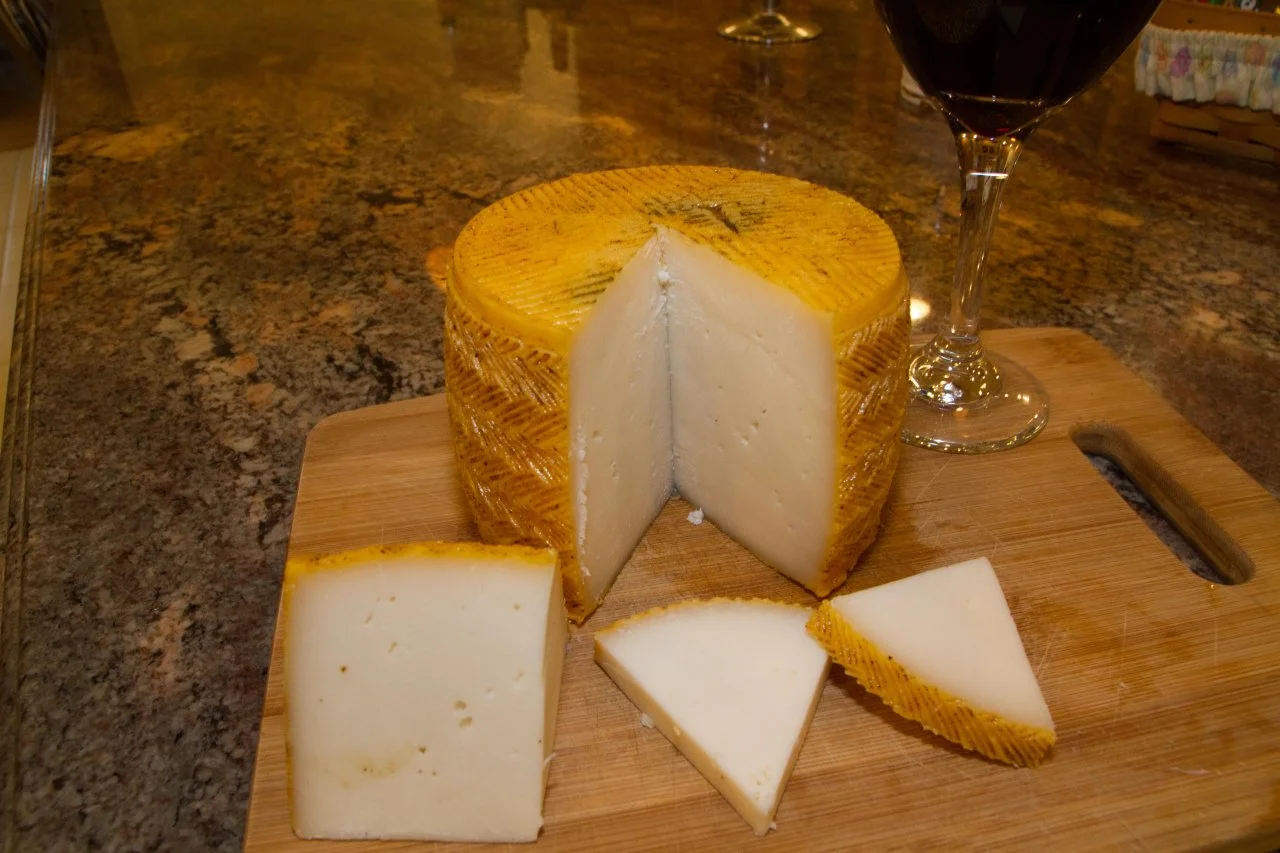
Here's a manchego I made with goat milk. I rubbed it down with olive oil and annatto and paprika to give the rind this interesting color. I extracted the annatto myself from seeds.

1753273305511.webp
 
Back
Top